Showing posts with label birds. Show all posts

Friday, May 2, 2014

Bosque Journal: May Flanerie


I've started a new routine of strolling along the river in the Bosque near my Downtown Albuquerque home in the mornings. While I would like to say my motivation is a deep appreciation of nature, I have to confess what got me to lace up my shoes was reading the advice I would burn off more calories if walked before eating breakfast. This appealed to my inner sloth.


I've never been into competitive sports, other than racing a sail boat, the ingenuity being I could skipper while staying comfortably seated in the back.


With the need to get more movement in my life, I've discovered the lost art of being a flaneur. Described in the 1800s as equal parts curiosity and laziness, it was a leisurely way to become an urban spectator of boulevards, parks, arcades, and cafes. Perfected in Paris, it was a philosophical cousin to the development of the dandy, minus the fancy clothes.


On my first couple of outings, I spent most of my stroll scrolling through my phone to check messages. When I returned home I didn't feel particularly refreshed. I've since learned to pay attention. The walk is an hour long meditation of footsteps.


We don't have an English translation for the French word flanerie. It remains a foreign concept. I recently read an advice column which posed the question-- What would you do if you came across a windfall? What if you were gifted with a large amount of unexpected money? How would you spend it?


The article went on to lecture the reader that wealth should be invested, not wasted on frivolous pursuits. As an example, the author stated using a home equity loan was better utilized for a kitchen remodel than blowing the money on a month-long vacation. Upgrading a home's kitchen and bathrooms was an investment in real estate.


How very American! We are taught from a young age to be small-minded about the rest of the world. We value the shiny new toilet. Never mind that unless the house is about to be sold, the kitchen and bath upgrades will soon be outdated. How does anyone calculate the value of a month of sabbatical? What if it saves the marriage of a decades married couple? Getting divorced is more costly in the long run than a great vacation.


We've lost any concept of leisure. Of how wasting time can broaden horizons. We are so busy doing we stop seeing the world around us.


During my jaunts in early May along the Bosque I am watching spring unfold. The geese are tending new babies, wild roses are blooming along the water, beavers are busy gnawing down trees, ducks strike off in pairs, the occasional rabbit crosses my dirt path, while song birds gather at the south end of the ponds.


The world changes a bit each day.

Monday, November 4, 2013

Journal of Drawings, Fall Bosque Trail


Bosque Trail in the South Valley

Albuquerque, New Mexico
November 2013
Photo Illustrations


Sandhill Cranes have arrived for the winter.


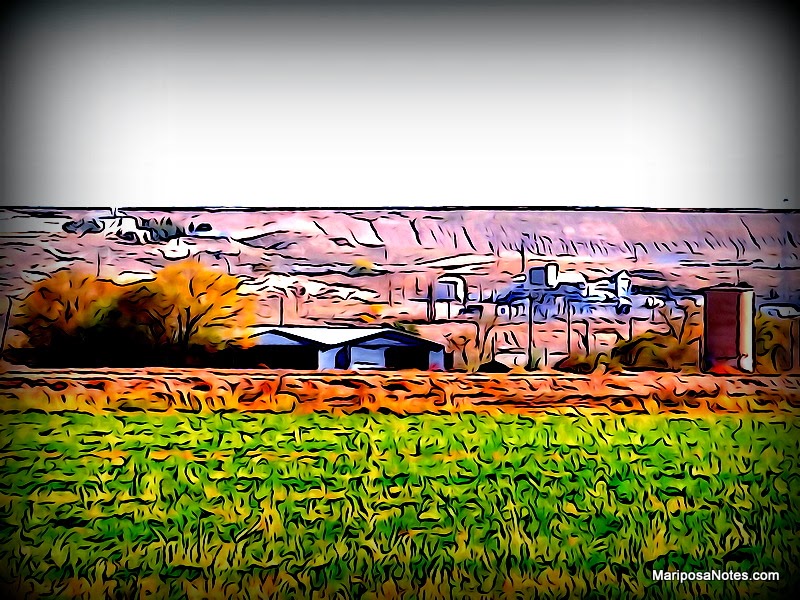
Farms along the valley.


Fall Colors.


Friday, December 21, 2012

ABQ: Solstice


ALBUQUERQUE

Winter Solstice


“I stood transfixed, the silence ringing in my ears. From the field of wild grasses; cocksfoot, tufted hair, wild oat, tall fescue, reed canary and perennial rye, their subtle shades of green, ochre and pink softly patching and blending in rustling movement, suddenly rose a small flock of starlings that had been feeding quietly unseen among the tall waving stems, the swish of their glossy wings startlingly loud in the stillness of midday. Heat held me captive.”
Nell Grey

Tuesday, November 27, 2012

ABQ: Bird Tracks


ALBUQUERQUE

Bird tracks along the Rio Grande in Downtown ABQ.


I prefer winter and fall, when you feel the bone structure of the landscape - the loneliness of it, the dead feeling of winter. Something waits beneath it, the whole story doesn't show.

Monday, November 19, 2012

ABQ: Bird Blinds


ALBUQUERQUE

Bird Blinds

This photo shows one of two bird blinds under construction at the Wetlands Restoration Project at the Tingley Ponds, between Tingley Beach and the Rio Grande.


From Wikipedia:

A bird hide (or hide, also known as a blind or bird blind in North America) is a shelter, often camouflaged, that is used to observe wildlife, especially birds, at close quarters. Although hides were once built chiefly as hunting aids, they are now commonly found in parks and wetlands for the use of bird watchers, ornithologists and other observers who do not want to disturb wildlife as it is being observed.

A typical bird hide resembles a garden shed, with small openings, shutters, or windows built into at least one side to enable observation.
Variant types of bird hide include:
  • the tower hide, which has multiple storeys and allows observations over large areas
  • the bird blind, which is a screen similar to one wall of a typical hide, with or without a roof for shelter
  • the machan, a covered platform erected to observe birds and wildlife in high trees or on cliffs, particularly in India where it was originally used by tiger-hunters.

Friday, November 16, 2012

ABQ: Bosque Dusk


ALBUQUERQUE

Bosque Dusk

“Dusk is just an illusion because the sun is either above the horizon or below it. And that means that day and night are linked in a way that few things are there cannot be one without the other yet they cannot exist at the same time. How would it feel I remember wondering to be always together yet forever apart?”

Nicholas Sparks, The Notebook

Tuesday, November 13, 2012

ABQ: Bird Watchers


ALBUQUERQUE

Bird Watchers

I photographed this bird at Tingley Beach. Note the feet are not webbed, as this American Coot isn't a duck. The bird is actually walking here rather than swimming. Their feet are built so that they get across water plants like lilly pads.


From the Cornell Lab of Ornithology:

American Coot


The waterborne American Coot is one good reminder that not everything that floats is a duck. A close look at a coot—that small head, those scrawny legs—reveals a different kind of bird entirely. Their dark bodies and white faces are common sights in nearly any open water across the continent, and they often mix with ducks. But they’re closer relatives of the gangly Sandhill Crane and the nearly invisible rails than of Mallards or teal.

Behavior

You’ll find coots eating aquatic plants on almost any body of water. When swimming they look like small ducks (and often dive), but on land they look more chickenlike, walking rather than waddling. An awkward and often clumsy flier, the American Coot requires long running takeoffs to get airborne.
  • Habitat

    Look for American Coots at ponds in city parks, in marshes, reservoirs, along the edges of lakes, and in roadside ditches, sewage treatment ponds, and saltwater inlets or saltmarshes.


  • Below is a list from the City of Albuquerque about birds found in the Middle Rio Grande area.


    Download a checklist.


    Ducks, Geese & Swans (Anatidae)

    • Canada Goose, Branta canadensis
    • Snow Goose, Chen caerulescens
    • Mallard, Anas platyrhynchos
    • Cinnamon Teal, Anas cyanoptera
    • Northern Shoveler, Anas clypeata
    • Northern Pintail, Anas acuta
    • American Wigeon, Anas americana
    • Wood Duck, Aix sponsa
    • Canvasback, Aythya valisineria
    • Redhead, Aythya americana
    • Ring-necked Duck, Aythya collaris
    • Bufflehead, Bucephala albeola
    • Hooded Merganser, Lophodytes cucullatus
    • Red-breasted Merganser, Mergus serrator

    New World Quail (Odontophoridae)

    • Gambel’s Quail, Callipepla gambelii

    Partridges, Grouse, Turkeys & Old World Quail (Phasianidae)

    • Ring-necked Pheasant, Phasianus colchicus

    Grebes (Podicipedidae)

    • Pied-billed Grebe, Podilymbus podiceps

    Bitterns, Herons & Egrets (Ardeidae)

    • Great Blue Heron, Ardea herodias
    • Great Egret, Ardea alba
    • Snowy Egret, Egretta thula
    • Cattle Egret, Bubulcus ibis
    • Green Heron, Butorides virescens
    • Black-crowned Night-Heron, Nycticorax nycticorax

    Ibises & Spoonbills (Threskiornithidae)

    • White-faced Ibis, Plegadis chihi

    New World Vultures (Cathartidae)

    • Turkey Vulture, Cathartes aura

    Ospreys (Pandionidae)

    • Osprey, Pandion haliaetus

    Hawks, Kites, Eagles & Allies (Accipitridae)

    • Red-tailed Hawk, Buteo jamaicensis
    • Northern Goshawk, Accipiter gentilis
    • Coopers Hawk, Accipiter cooperii
    • Sharp-shinned Hawk, Accipiter striatus
    • Bald Eagle, Haliaeetus leucocephalus

    Caracas & Falcons (Falconidae)

    • American Kestrel, Falco sparverius

    Rails, Gallinules, and Coots (Rallidae)

    • American Coot, Fulica americana

    Cranes (Gruidae)

    • Sandhill Crane, Grus canadensis

    Lapwings & Plovers (Charadriidae)

    • Killdeer, Charadrius vociferus

    Sandpipers, Phalaropes & Allies (Scolopacidae)

    • Spotted Sandpiper, Actitis macularius
    • Solitary Sandpiper, Tringa solitaria
    • Common Snipe, Gallinago gallinago
    • Western Sandpiper, Calidris mauri

    Gulls, Terns & Skimmers (Laridae)

    • Ring-billed Gull, Larus delawarensis
    • Herring Gull, Larus argentatus
    • Black Tern, Childonias niger

    Pigeons & Doves (Columbidae)

    • Rock Pigeon, Columba livia
    • White-winged Dove, Zenaida asiatica
    • Eurasian Collared-Dove, Streptopelia decaocto
    • Mourning Dove, Zenaida macroura

    Cuckoos, Roadrunners & Anis (Cuculidae)

    • Greater Roadrunner, Geococcyx californianus

    Typical Owls (Strigidae)

    • Great Horned Owl, Bubo virginianus
    • Western Screech Owl, Megascops kennicottii

    Goatsuckers (Caprimulgidae)

    • Common Nighthawk, Chordeiles minor

    Hummingbirds (Trochilidae)

    • Broad-tailed Hummingbird, Selasphorus platycercus
    • Calliope Hummingbird, Stellula calliope
    • Rufous Hummingbird, Selasphorus rufus
    • Black-chinned Hummingbird, Archilochus alexandri

    Kingfishers (Alcedinidae)

    • Belted Kingfisher, Megaceryle alcyon

    Woodpeckers & Allies (Picidae)

    • Northern Flicker, Colaptes auratus
    • Ladder-backed Woodpecker, Picoides scalaris
    • Downy Woodpecker, Picoides pubescens
    • Hairy Woodpecker, Picoides villosus
    • Williamson's Sapsucker, Sphyrapicus thyroideus
    • Red-naped Sapsucker, Sphyrapicus nuchalis

    Tyrant Flycatchers (Tyrannidae)

    • Black Phoebe, Sayornis nigricans
    • Say’s Phoebe, Sayornis saya
    • Ash-throated Flycatcher, Myiarchus cinerascens
    • Western Kingbird, Tyrannus verticalis

    Vireos (Vireonidae)

    • Warbling Vireo, Vireo gilvus

    Jays, Crows, Magpies & Ravens (Corvidae)

    • Western Scrub Jay, Aphelocoma californica
    • American Crow, Corvus brachyrhynchos
    • Chihuahuan Raven, Corvus cryptoleucus

    Swallows & Allies (Hirundinidae)

    • Barn Swallow, Hirundo rustica
    • Violet-green Swallow, Tachycineta thalassina
    • Tree Swallow, Tachycineta bicolor
    • Northern Rough-winged Swallow, Stelgidopteryx serripennis
    • Cliff Swallow, Petrochelidon pyrrhonota

    Chickadees & Titmice (Paridae)

    • Mountain Chickadee, Poecile gambeli
    • Black-capped Chickadee, Poecile atricapillus

    Bushtits (Aegithalidae)

    • Bushtit, Psaltriparus minimus

    Nuthatches (Sittidae)

    • Red-breasted Nuthatch, Sitta canadensis
    • White-breasted Nuthatch, Sitta carolinensis

    Creepers (Certhiidae)

    • Brown Creeper, Certhia americana

    Wrens (Troglodytidae)

    • Bewick’s Wren, Thryomanes bewickii
    • House Wren, Troglodytes aedon

    Gnatcatchers & Gnatwrens (Polioptilidae)

    • Blue-gray Gnatcatcher, Polioptila caerulea

    Dippers (Cinclidae)

    • American Dipper, Cinclus mexicanus

    Kinglets (Regulidae)

    • Ruby-crowned Kinglet, Regulus calendula

    Thrushes (Turdidae)

    • American Robin, Turdus migratorius
    • Hermit Thrush, Catharus guttatus
    • Eastern Bluebird, Sialia sialis
    • Western Bluebird, Sialia mexicana

    Mockingbirds & Thrashers (Mimidae)

    • Northern Mockingbird, Mimus polyglottos

    Starlings & Mynas (Sturnidae)

    • European Starling, Sturnus vulgaris

    Waxwings (Bombycillidae)

    • Cedar Waxwing, Bombycilla cedrorum

    Wood-warblers (Parulidae)

    • Ovenbird, Seiurus aurocapilla
    • Orange-crowned Warbler, Orethlypis celata
    • Virginia's Warbler, Orethlypis virginiae
    • Yellow Warbler, Seophaga petechia
    • Yellow-rumped Warbler, Seophaga coronata
    • Black-throated Gray Warbler, Setophaga nigrscens
    • Common Yellowthroat, Geothlypis trichas
    • MacGillivray's Warbler, Geothlypis tolmiei
    • Wilson's Warbler, Cardellina pusilla

    Emberizids (Emberizidae)

    • Green-tailed Towhee, Pipilo chlorurus
    • Canyon Towhee, Pipilo fuscus
    • Spotted Towhee, Pipilo maculatus
    • Brewer's Sparrow, Spizella brewire
    • Lark Sparrow, Chondestes grammacus
    • Dark-eyed Junco, Junco hyemalis "Oregon" form "Slate-colored" form "Gray-headed" form "Pink-sided" form
    • White-crowned Sparrow, Zonotrichia leucophrys
    • Chipping Sparrow, Spizella passerina
    • Song Sparrow, Melospiza melodia
    • Lincoln’s Sparrow, Melospiza lincolnii

    Cardinals, Piranga Tanagers & Allies (Cardinalidae)

    • Summer Tanager, Piranga rubra
    • Western Tanager, Piranga ludoviciana
    • Black-headed Grosbeak, Pheucticus melanocephalus
    • Lazuli Bunting, Passerina amoena
    • Blue Grosbeak, Passerina caerulea
    • Indigo Bunting, Passerina cyanea

    Blackbirds, Meadowlarks, Cowbirds, Grackles & Orioles (Icteridae)

    • Red-winged Blackbird, Agelaius phoeniceus
    • Yellow-headed Blackbird, Xanthocephalus xanthocephalus
    • Great-tailed Grackle, Quiscalus mexicanus
    • Common Grackle, Quiscalus quiscula
    • Brown-headed Cowbird, Molothrus ater
    • Bullock’s Oriole, Icterus bullockii

    Fringilline & Cardueline Finches and Allies (Fringillidae)

    • House Finch, Carpodacus mexicanus
    • American Goldfinch, Carduelis tristis
    • Lesser Goldfinch, Carduelis psaltria
    • Pine Siskin, Carduelis pinus
    • Evening Grosbeak, Coccothraustes vespertinus

    Old World Sparrows (Passeridae)

    • House Sparrow, Passer domesticus